Designed. Printed.
Every part starts as a 3D model — drafted in CAD, tolerance-checked, and printed to fit in the material the job calls for. Parts for the engine bay, interior, and everywhere a stock part fell short.
Parts that fit the car you actually have.
3D-Printed Performance Parts
Custom intakes, ducting, sensor housings and structural components — printed in the material the job calls for and designed for your exact application. Past builds include the Volvo T6 cold air intake (now v5), custom tractor lighting housings, fan remakes, and precision mounting brackets.
Gauge Pods & Panels
Gauge pods are what I am designing right now, with switch panels and interior trim next. Each one is drafted from scratch in CAD, with every curve and mounting point modeled to your specific vehicle. No universal kits. Taking first projects now.
Reverse Modeling
Existing part you cannot source anymore? Bracket no one makes? I measure, scan, or model from your reference in parametric CAD, then deliver a printed prototype — ready to fit-check on the actual car. I keep the CAD file; a file buyout is 50% of the design fee.
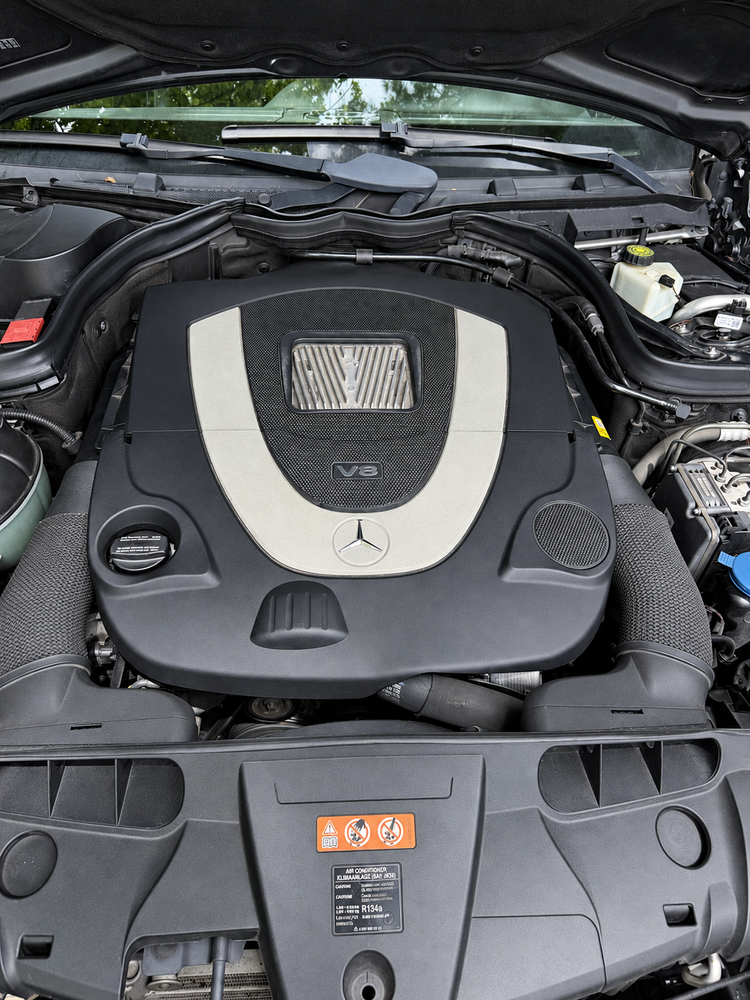
Real parts, on real cars.



What I print with.
Heat-stable and structurally strong. The same material family used in OEM under-hood parts, and the default for anything that lives in the engine bay.
Used where a little flex is an asset rather than the enemy — brackets, mounts, and structural housings that need to absorb movement.
Clean surface finish for visible parts that need to look as good as they perform. Interior panels, trim, anything you will actually see.
Bushings, grommets and gaskets. A spec picked to match the application, not guessed at because it was already on the printer.
Same material family. Different process.
PA6-GF is the same glass-filled nylon family carmakers mold under-hood parts from, so it is at home with engine-bay heat, oil and fuel vapor. The difference is how the part is made. A molded part is one solid piece. A printed part is built in layers. I design around that: thicker walls than stock, loads run along the layers, and metal inserts where threads matter.
| Stock molded part | SilvaDes printed part | |
|---|---|---|
| Material | Glass-filled nylon | Glass-filled nylon (PA6-GF) for under-hood parts |
| Fit | One shape per model | Modeled to your car and fit-checked before handover |
| Strength | Highest; solid all the way through | Lower, mostly across the layers; walls are made thicker to make up for it |
| Heat | Engine-bay rated | Engine-bay rated; not for exhaust or turbo heat |
| Finish | Smooth | Fine layer lines |
| Changes | None | Any dimension, port or mount can be changed |
| Availability | Whatever is still stocked | Made to order, including discontinued parts |
| Backing | Validated for the life of the vehicle | 90-day limited warranty |
What I won't print: anything in the exhaust or turbo heat path, and anything in steering, suspension or brakes. If your part is one of those, I'll tell you up front.
From concept to car.

Measure
Calipers, scanners, references — nothing starts in CAD until the real-world dimensions are locked in.

Model
Full parametric CAD. Wall thickness, draft, mounting points and tolerances all checked before manufacturing.

Printed in the right material for your application: PA6-GF, PA6, PETG-CF or TPU. Enclosed Bambu Lab X1 Carbon printers, with the nylons kept dry in a heated feeder while they print.

Fit
Test-fit on the vehicle. If it does not drop in clean the first time, it goes back to the model — not onto the car.
One bench, one pair of hands.
Ben Hoffman
I started Silvades because I was tired of seeing automotive parts that were close enough. Close enough does not cut it when you are building something that has to perform.
Every part I design begins as a full 3D parametric model — tolerance-checked and test-fit before anything gets manufactured. I print in several materials and pick one per job. The flagship is PA6-GF glass-filled nylon, the same material family used in OEM under-hood components, with PA6, PETG-CF and TPU for parts that need flex, a clean visible finish, or a soft seal.
The flagship is the Volvo T6 cold air intake, currently on its fifth design iteration. Recent work also includes custom tractor lighting housings, pulley assemblies, fan remakes and precision-fit mounting brackets. On the bench now: gauge pods, plus more drone work on the media side. If it needs to be designed, modeled, and made to actually fit — that is what I do.
Quoted per part, not per hour.
Custom work is quoted before anything starts. Send me the car, the part, and what it needs to do — photos and rough measurements are enough to begin. You get a number and a timeline before I touch CAD, and that number does not move unless the scope does.
Catalog parts like the T6 intake are fixed-price in the shop. Everything else depends on three things:
Why one part gets printed, not molded.
Injection molding needs a metal mold that costs thousands before the first part exists. That only pays off across hundreds of identical parts. A printed part needs no tooling, so the first one costs about the same as the tenth, and a design change is a file edit, not a new mold.
What a one-off usually takes
| Step | Going elsewhere | Here |
|---|---|---|
| Scan and rebuild in CAD | A separate scan-to-CAD service, usually a week or two | Part of one quote |
| Make one part | A separate machine shop, priced per setup | Printed in-house |
| Fit check | Yours to sort out | Done before handover |
| Who you deal with | Two or three vendors | One |
Start your project.
Tell me the car and the part. Photos and rough measurements are enough to get a real quote back.